Project 39A is inspired by Article 39-A of the Indian Constitution, a provision that furthers the intertwined values of equal justice and equal opportunity by removing economic and social barriers. These are constitutional values of immense importance, given the manner in which multiple disparities intersect to exclude vast sections of our society from effectively accessing justice.
We seek to promote the use of scientifically valid and reliable forensic evidence for criminal investigation and prosecution; addressing the lack of legislative frameworks, infrastructural gaps and judicial engagement with forensic science.
72.6% of India's prisoners are undertrials (NCRB 2024), the vast majority from marginalised sections of society. We engage in proactive litigation, combining research and legal expertise to ensure effective representation before the Courts.
We aim to bridge the gap between criminal law and mental health, integrating a rights-based approach into the criminal justice system; at the stage of trial, sentencing, and rehabilitation; in close collaboration with psychiatric and clinical experts.
Project 39A was envisaged to put forth a principled challenge to the death penalty. We provide pro bono representation to death row prisoners across all levels of the judiciary, and conduct comprehensive empirical and interdisciplinary research on capital punishment.
We confront the realities of custodial torture; pervasive within Indian jails; and work to facilitate access to justice for prisoners subjected to it, while advocating for legislative reform and accountability for perpetrators of custodial violence.
Follow Project 39A on social media for real-time updates on death penalty statistics, criminal justice reform, new publications, internship openings, and events from National Law University Delhi.
The Advisory Committee is currently being reconstituted. New appointments will be announced shortly once the board is finalised.
"The State shall secure that the operation of the legal system promotes justice, on a basis of equal opportunity, and shall, in particular, provide free legal aid, by suitable legislation or schemes or in any other way, to ensure that opportunities for securing justice are not denied to any citizen by reason of economic or other disabilities."
An interdisciplinary online course examining the interface between mental health, forensic science and India's criminal justice system — for lawyers, judges, and allied professionals.
A practical online course on forensic science disciplines and their application in criminal trials — helping legal practitioners understand, challenge and use forensic evidence effectively.
In collaboration with Eleos Justice, Monash University, Project 39A had launched two interdisciplinary courses — Decoding Forensics for Legal Professionals and Forensic Mental Health and Criminal Justice. We encourage lawyers, judges and students to enroll.
The National Law University, Delhi was established in 2008 under the National Law University Act, 2007 with the objective of imparting comprehensive and interdisciplinary legal education.
The University has signed several Memoranda of Understanding with national and international universities with a view to encourage collaborative academic activity. The University is committed to disseminating legal knowledge and developing the pedagogical acumen necessary to engage with contemporary legal issues of public importance.
Project 39A, formerly known as the Centre on the Death Penalty, was born out of our institutional ethos to facilitate access to justice and exemplary legal representation for all, particularly for marginalised sections of our society; in accordance with our Constitutional mandate under Article 39A of the Indian Constitution to ensure equal justice and access to legal aid for all.
The fragmented and divided nature of our social fabric and the seemingly insurmountable economic and social barriers faced by those who are forcibly relegated to the margins of our society make the vision and values of Project 39A of critical import, particularly during times when the rights of citizens are being increasingly curtailed.
We are committed to pursuing a critical engagement with the criminal justice system on multiple fronts with an interdisciplinary approach; spearheaded by leading lawyers, academics and experts; through the representation of undertrial and death row prisoners before various Courts across the country, and the conduction of thorough empirical research within the domains of capital punishment, mental health in prisons, forensics, torture and legal aid. We strive to discharge our role guided by the foundational tenets of academic freedom, rigour, and independent lawyering premised upon ethical frameworks recognising the sanctity of human life, liberty and dignity.
We undertake diligent documentation, sound collection of empirical evidence and thorough analysis of jurisprudence before heading down a prescriptive path, to inform the measures and initiatives undertaken by us.
We democratise access to information on issues relevant to the criminal justice system and public interest at large, given the profound impact it has on citizens.
In addition to our team of highly qualified lawyers, we engage with leading professionals and experts in the domains of forensics, psychiatry, social work, medicine, economics, anthropology and literature to bring a multi-disciplinary approach to our work.
We actively represent prisoners who are convicted on death row as well as under-trial prisoners before various Courts, to provide them with a robust legal defense in accordance with their constitutional rights. In furtherance of our commitment to legal aid, we represent litigants from marginalised communities across various cases.
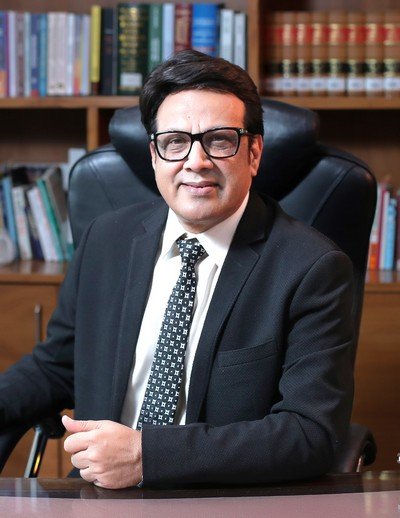
Prof. (Dr.) G.S. Bajpai is the Vice-Chancellor of National Law University, Delhi. He is the Patron-in-Chief of Project 39A, providing institutional leadership and vision to the organisation's work in criminal justice reform, legal aid, and empirical research.
"These appointments mark an important step in strengthening the leadership and vision of Project 39A, further advancing its work in research, training, capacity-building, and systemic reform within the criminal justice system."
Project Manager (Project 39A) and Coordinator (Legal Aid Clinic), National Law University Delhi. LL.B., Faculty of Law, University of Delhi; LL.M. in Constitutional Law, HPNLU Shimla. Previously associated with the Ministry of Labour & Employment, GOI, on the rule-making process of the New Labour Codes. Areas of interest: Criminal Law, Labour Law, Constitutional and Administrative Law.

Academic Fellow at Project 39A, National Law University Delhi. LL.B., Campus Law Centre, University of Delhi; LL.M. in Public Law, National Law University Delhi. Previously associated with matters related to Child Care and Protection, Juvenile Justice and allied areas, appearing before the Juvenile Justice Board and Children's Court, and assisting in developing training modules on Child Protection Laws for Madhya Pradesh Police.

Litigation-cum-Research Associate at Project 39A, National Law University Delhi. B.A. LL.B. (Hons.), Jindal Global Law School. Prior experience includes law firms, an AOR at the Supreme Court of India, and a Legal Researcher to a judge of the Delhi High Court across various domains of law.
Our work on forensics seeks to promote the use of scientifically valid and reliable forensic evidence for the purposes of criminal investigation and prosecution. Lack of manpower, infrastructural inadequacies and organisational mismanagement are the main reasons for the sub-par functioning of government forensic science laboratories.
Currently, there is no legislative framework to regulate the functioning of forensic laboratories in India or enforce any quality standards. This leads to variance in practices adopted by investigative agencies and forensic laboratories across different states. On the part of the judiciary, there has been little engagement on the admissibility and weight of forensic evidence guided by scientific validity and reliability.
In order to build a sustainable and reliable model for Indian forensics, the law and practice on expert evidence must be revamped. This will not only ensure the use of accurate and reliable evidence in casework but also affect broader change towards improving existing standards and procedures followed in forensic laboratories.
Op-eds, research briefs, explainers, and analysis published by the Project 39A team — covering death penalty law, criminal procedure, legal aid, torture, forensics, and mental health in the Indian criminal justice system.
NLU Delhi announces the revitalisation of Project 39A, one of the University's leading research centres working in the areas of access to justice, legal aid, and criminal justice reform. Read on LiveLaw →
Previous Publications by the Project 39A team.
Project 39A's work has been covered by The Hindu, Indian Express, LiveLaw, Bar & Bench, Legally India and international media.
Have research, analysis, or commentary on criminal justice in India? We welcome submissions from lawyers, researchers, academics, and civil society practitioners. Articles are reviewed by the Project 39A editorial team before publication.
We will review your article and respond within 4–6 weeks. Due to the volume of submissions, we may not be able to respond individually to every inquiry.
Project 39A
National Law University, Delhi
Sector 14, Dwarka
New Delhi – 110078
India
Use this form for general enquiries. For internship applications, please use the Internship page.
Project 39A is a research and legal aid centre at the National Law University Delhi, inspired by Article 39-A of the Constitution of India. We provide pro bono legal representation to death row prisoners and conduct empirical research on criminal justice.
Project 39A regularly seeks lawyers, researchers, social workers, and mental health professionals committed to criminal justice reform. We are an equal opportunity employer.
Project 39A is a research and legal aid centre at the National Law University Delhi. It provides pro bono legal representation to death row prisoners across India, in addition to conducting empirical and doctrinal research on the death penalty, prevention of torture, legal aid, sentencing, and mental health and criminal justice.
As part of our efforts to revitalise the initiatives undertaken by Project 39A, we are always on the lookout for passionate and hardworking professionals who strongly believe in Constitutional values, the defence of civil liberties and dignity for all. If this interests you, please write to us at p39a@nludelhi.ac.in, expressing your interest in any of the available vacancies listed on our website.
Rolling applications for law, humanities, social science and management students. Full-time internships from 4–12 weeks based at NLU Delhi.
Vacancies will be updated for any open positions in this section. We recruit for roles that directly contribute to criminal justice reform in India.
Project 39A is keen to develop a robust and rewarding internship programme that will provide meaningful exposure to the complexities and nuances of the criminal justice system in India. We accept interns on a rolling basis throughout the year.
Project 39A is a formal part of NLU Delhi and undertakes research and pro bono litigation efforts on issues concerning the criminal justice system in India. This effort is inspired by Article 39-A of the Indian Constitution and uses empirical research as an integral part of re-examining the criminal justice system.
In its current scope of work, Project 39A aims to trigger new conversations on legal aid, torture, forensics, mental health and criminal law, and the death penalty.
The different kinds of work undertaken include research (fieldwork and empirical analysis) and litigation (pro bono legal representation for death row prisoners).
The internship is open to students in India and other countries enrolled in a recognised undergraduate or post-graduate programme in:
Internships are full-time and for a period of minimum 4 weeks to a maximum of 12 weeks. Candidates must indicate exact dates in their application.
Interns shall be based out of our offices on the NLU Delhi campus, Sector 14, Dwarka, New Delhi 110078.
While part-time applications are considered, there is a strong preference for full-time interns. Part-time interns, if selected, are required to intern for a minimum of 12 weeks.
Candidates will be asked to undertake tasks that may involve:
While the organisation shall attempt to account for the interests expressed by interns, it reserves the right to allocate tasks as it deems fit. Interns will be required to observe the working hours of Project 39A and work from its offices only.
Only successful applicants will be contacted at least 6 weeks before their internship start date. If you do not hear from us, please assume that your application has not been successful. Due to the high volume of applications, communication via phone or email will not be entertained.
Fill in the form below. Only successful applicants will be contacted.
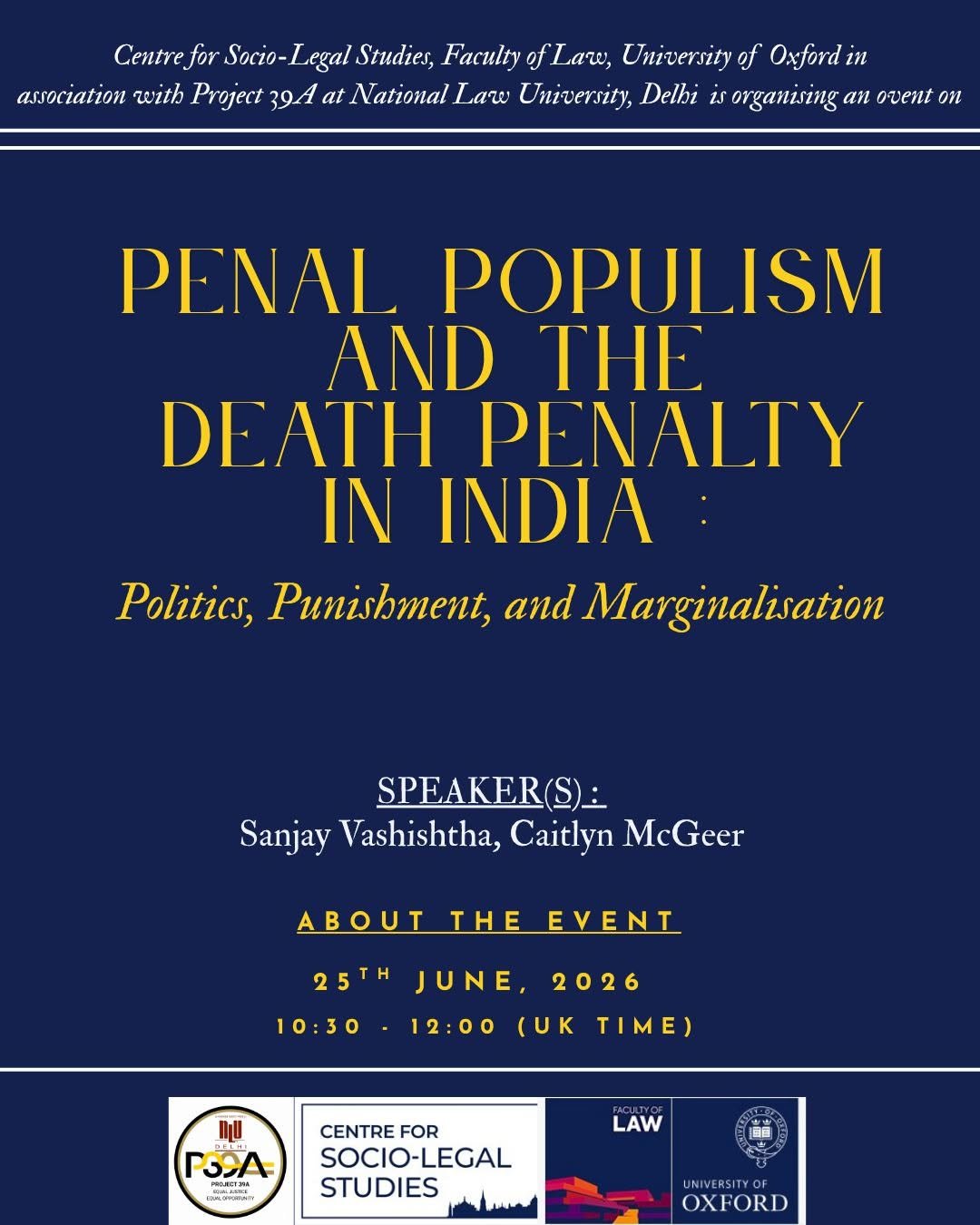
A leading voice in India's legal community with expertise spanning constitutional law, criminal defence, and access to justice advocacy. Executive Director of Project 39A at National Law University, Delhi.
Mr. Sanjay Vashishtha pursued his BA LLB (Hons) from the Faculty of Law, Jamia Millia Islamia, followed by an LLM in Comparative Law from McGill University, Canada, and an MSc in Criminology & Criminal Justice from the University of Oxford, United Kingdom.
At Oxford, Mr. Vashishtha was a recipient of St Cross funding and was elected as the community representative. He studied the law, practice, and sociology of the death penalty at the University of Oxford. Throughout his academic career he has been a recipient of several national awards and scholarships, including the prestigious National Scholarship by the Bar Council of India Trust.
As a Counsel, Mr. Vashishtha has been engaged by several high-profile entities and individuals including Padma Bhushan and Padma Vibhushan Awardees. He has successfully represented clients and corporations; both national and international; in commercial claims and disputes as a lead arguing counsel running into several thousand crores, and has defended clients in key matters involving special and general penal laws, obtaining reportable judgements.
He has represented the Election Commission of India, National Law University Delhi (as its Standing Counsel), Delhi Police (as Consultant Legal), Rajiv Gandhi National Law University Patiala, Municipal Corporation of Delhi, and Delhi Development Authority. He successfully represented the Saket Bar Association; a body of 12,000 lawyers; as lead counsel before the NGT, securing a landmark order regarding the Saket Court Complex.
Mr. Vashishtha practices on both the original and appellate side before Courts of Higher Judicature, NCLT, NCLAT, and the Supreme Court of India. He is also a defence counsel in several high-profile and sensitive criminal matters.
Mr. Vashishtha has served as a consultant to the Penal Law Reform Committee of India, constituted by the Ministry of Home Affairs to amend penal laws. He is an expert member of a Government of India Committee to study the law relating to "right to repair in India", and a board member of Dr. B.R. Ambedkar University, Delhi.
He has been invited by the National Investigation Agency to train its officers and has addressed the Parliament of India on several occasions, speaking to participants from more than 80 countries.
Mr. Vashishtha is a Guest Faculty at Delhi Police Specialised Training Centre and Professor of Practice at Lloyd Law College, Noida. He has been guest faculty at the University of Oxford (Department of Criminology), Hindu College (Delhi University), NLU Delhi, Ram Manohar Lohia National Law University Lucknow, Manav Rachna International University, Indian Police Foundation, Symbiosis Law School, Rajiv Gandhi National University of Law Patiala, the Institute of Parliamentary Studies (Parliament of India), and Jindal Global Law School, Sonipat, among others. He has delivered lectures on evidence-based policing to IPS officers and other officers from across the country and is a member of committees constituted by the Government of India to amend sensitive laws.
He has published extensively in national and international journals including University of Oxford, London Redress, York University Law Journal, International Journal of Humanities and Social Science, and the Journal of Indian Law Institute, and contributes regularly to Live Law and Bar & Bench. He is an expert member of Supreme Court Cases (SCC) Blogs and represents Supreme Court Cases (SCC) and Eastern Book Company as its Counsel. He authored the 8th Edition of the book on Criminology published by Eastern Book Company; launched by then Chief Justice of India, Hon'ble Justice U.U. Lalit.
Author of the 8th Edition of Criminology, Eastern Book Company; launched by former Chief Justice of India, Hon'ble Justice U.U. Lalit.
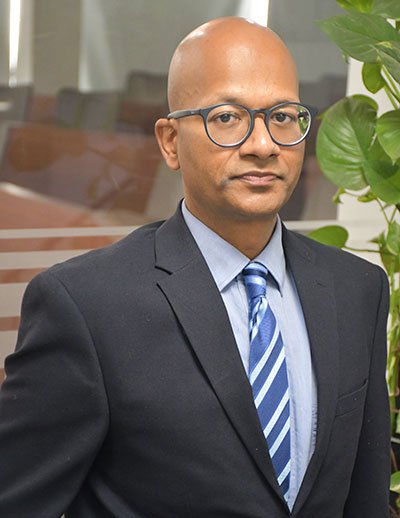
Dr. Pupul Dutta Prasad is a senior officer of the Indian Police Service (IPS), currently posted as IG, BPR&D.
He holds an MSc in Human Rights and a DPhil from the London School of Economics and Political Science (LSE), London. In addition, he has an MA in International Relations from Jawaharlal Nehru University (JNU), New Delhi, and an LLB from the University of Delhi.
Last updated: May 2026 · Project 39A, National Law University Delhi
Project 39A is a research and legal aid centre at the National Law University Delhi (NLU Delhi), Sector 14, Dwarka, New Delhi – 110078. We are the data controller responsible for the personal information collected through this website. For any privacy-related queries, contact us at p39a@nludelhi.ac.in.
We collect personal data only when you voluntarily submit it to us through the forms on this website. Specifically:
We do not use tracking cookies, advertising networks, or third-party analytics tools on this website. We do not collect any data passively.
Internship application data is used solely to evaluate your application. It is reviewed by members of the Project 39A team involved in recruitment. We do not share your personal data with third parties, sell it, or use it for marketing purposes. Unsuccessful applications are deleted after the selection process concludes. If your application is successful, a subset of your data may be retained as part of our organisational records for the duration of your association with Project 39A.
Unsuccessful internship applications are retained for a maximum of six months after the relevant application cycle ends, after which they are securely deleted. Article submissions that are not published are retained for up to three months. We do not retain personal data longer than necessary for the purposes described in this policy.
Under applicable data protection law (including the Digital Personal Data Protection Act, 2023 and, where applicable, the GDPR), you have the following rights:
To exercise any of these rights, please write to p39a@nludelhi.ac.in with the subject line "Data Privacy Request". We will respond within 30 days.
We take reasonable technical and organisational measures to protect personal data from unauthorised access, disclosure, or loss. This website is served over HTTPS. Access to submitted application data is restricted to authorised Project 39A staff only.
This website does not use cookies for tracking or advertising. We may use browser session storage for purely functional purposes (e.g., remembering that a notification has been dismissed). No personal data is stored in cookies.
We may update this Privacy Policy from time to time. Any changes will be posted on this page with an updated "Last updated" date. We encourage you to review this page periodically.
If you have any questions about this Privacy Policy or how we handle your data, please contact:
© 2026 Project 39A, National Law University Delhi. All rights reserved.
Privacy Policy